

Every weekday evening, our editors guide you through the biggest stories of the day, help you discover new ideas, and surprise you with moments of delight. Subscribe to get this delivered to your inbox.
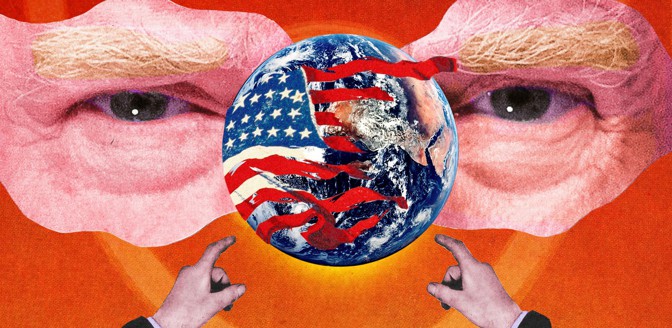
President Donald Trump held up a mirror to the American foreign-policy establishment, two of our writers argue, forcing it to reckon with a broken status quo.
“Trump may have no idea that he is revealing any of this; he may not even agree with the things he is revealing,” Tom McTague and Peter Nicholas write. “Yet he is revealing them nonetheless.”
Tom and Peter, who are based in London and Washington, D.C., respectively, conducted several dozen interviews with experts in the United States and in Europe, as well as current and former administration officials. Below are three of their takeaways from the past four years of Trumpism:
1. Trump revealed a new world order.
After decades of international adventures that have left the U.S. overstretched, overwhelmed, and overburdened, it was Trump who blurted out the uncomfortable truth: American foreign policy was failing, and had been for decades.
2. His foreign policy remains driven by naïveté …
Time and again, we were struck by the assessment, related by multiple sources in separate meetings, that Trump’s most important characteristic when it came to foreign policy was not what his critics charge—his amorality or vindictiveness, his lack of success or diplomatic vandalism. They said … [it] was his naïveté.
3. … and, practically speaking, empty.
Trump, even as he calls out the American-built world order for its failures, has no coherent plan to replace it, no system that would work better. He isn’t trying to reorder the world; he’s just pointing at the order and calling it naked. Or as [Fiona Hill, Trump’s former senior director on European and Russian affairs at the National Security Council] put it: “He’s a chaos agent.”
Further reading: These world leaders want Trump to win the election, Yasmeen Serhan reports.

14 days remain until the 2020 presidential election. This is today’s essential read:
The far-right misinformation ecosystem is preparing for the possibility that Trump might lose, Renée DiResta reports.
“Its goal is simple—to preemptively delegitimize any outcome but a clear victory by the incumbent.”
Want to better understand the ongoing coronavirus outbreak? Here are four key stories from our team:
Stuck on what to stream? Let us help:
’Tis the season for a fright. Our critic David Sims selected 25 of the best horror films, ranked by scariness.
Today’s break from the news:
“Our boyfriends, our significant others, and our husbands are supposed to be No. 1. Our worlds are backward.” Rhaina Cohen writes about people who consider a friend to be their life partner.
Did someone forward you this newsletter? Sign up here. Need help? Contact Customer Care.

from The Atlantic https://ift.tt/2IMkVGR
Today, The Atlantic launched Planet, a new section devoted to climate change, along with The Weekly Planet, a new newsletter written by Robinson Meyer. He also writes today’s edition of the Daily, explaining why the climate story is so exciting right now.

I’ve been covering climate change at The Atlantic for five years. There’s still one question I get more than any other: Are you hopeful? At this point, honestly, I find the question to be a little beside the point: If you don’t want the planet to warm, you should work to reduce carbon pollution regardless of whether you’re hopeful about the overall outcome.
Many things in the world aren’t going well, to put it mildly. But the fight against climate change got some excellent news this week.
The International Energy Agency announced, in its enormously influential annual report, that solar energy is now the “cheapest electricity in history.” At the same time, it substantially downgraded its forecast for coal, saying that the fuel source will soon enter a prolonged and irreversible decline. That means global carbon pollution could peak in the next several years—though, without further policy, it will not decline as rapidly as needed to avoid catastrophic global warming.
But in the past few years, the outlook has brightened—even as the disastrous consequences of climatic upheaval have gotten worse. For years, the goal of climate policy was to make renewable energy cost-competitive with fossil fuels. Now that’s a reality.
In the next few weeks and months, we’ll learn what kind of policy such breakthroughs will enable—and what new ideas and tools we still need along the way. If that sounds interesting—or even if you wish you spent more time every week keeping up with climate change—please subscribe to The Weekly Planet.
More from our new Planet section:
-
Vann R. Newkirk II on Earth’s new gilded era
-
Sabrina Imbler on why you should kill your gas stove
-
Lawrence Weschler on the climate fight’s Scylla and Charybdis

One question, answered: Are gas stoves bad for you?
Our science editor Sarah Laskow explains:
About a third of American households rely on natural gas to cook, and although starting a small gas fire in the kitchen might seem mundane, it’s surprisingly dangerous to human health. The science journalist Sabrina Imbler looked into this for us, and concluded that anyone who can afford to avoid cooking with gas probably should.
The main problem is that gas stoves spew pollution inside the house, at levels that would be illegal outdoors. One of these chemicals, nitrogen dioxide—which is also found in car exhaust—can cause people with respiratory issues to cough and wheeze, and people without respiratory issues to develop them.
Gas stoves also require buildings to have gas lines, which require extensive gas infrastructure. That setup helps keep residential areas from switching over entirely to renewable energy.
Electric stoves do use more energy, but they do not spew noxious chemicals into your kitchen. And a number of chefs promised that an induction stove can do almost anything a gas stove can. (They were, however, divided on the subject of stir-fry.)
19 days remain until the 2020 presidential election. Here’s today’s essential read:
Barack Obama is “an arena politician, strongest in front of a crowd cheering for him.” That’s not an option this year, so he’ll campaign for Joe Biden and Kamala Harris in other ways, Edward-Isaac Dovere reports.
Today’s break from the news:
Speaking of our extraordinary planet: Take a moment to browse this inspiring collection of wildlife photography.
Did someone forward you this newsletter? Sign up here. Need help? Contact Customer Care

from The Atlantic https://ift.tt/3dDrcAc
On the White House grounds this morning, senior West Wing aides walked around without masks. They spoke with the press without masks. They huddled privately with one another and didn’t wear masks.
When I visited the White House in August, no one checked to see if I was running a fever or suppressing a hacking cough as I passed through the security booth. The ritual was the same today: I showed up hours after we’d learned that President Donald Trump had tested positive for the coronavirus, yet no one asked about my health. Instead, I was simply searched for weapons and allowed in.
I’ve written twice in recent months about the dangerous conditions around the president—about lax testing of journalists flying with him on Air Force One, about troubling working arrangements inside the executive mansion itself. Trump’s illness seems an outgrowth of the administration’s flagrant disregard for public-health precautions. And yet, there’s no sign of a real course correction: The practices today seemed every bit as lax. When Trump walked deliberately toward Marine One tonight, in a dark suit and matching mask, he waved to reporters who all day had been trying to find out information about his condition.
But he left a White House that, even though he’s been stricken with a potentially fatal disease, seemed no safer than at any other point in the pandemic. Officials don’t appear to have learned much from the nightmare.
As far as I could tell, the White House’s lone concession to the catastrophe unfolding before our eyes was that a few junior aides working in the suite of offices accessible to the press corps sat at their desks in masks. During my August trip, none of the aides breathing the same air in this cramped warren of offices had seen fit to wear them.
[David A. Graham: Trump’s denial has now produced what he feared]
On this day, of all days, a mask would have seemed indispensable. But a senior White House official told the Associated Press this afternoon that masks amount to a “personal choice.” Larry Kudlow, the president’s top economic adviser, was effectively goaded into wearing one during an impromptu press conference today. Kudlow said he wanted to make sure the press could hear him while keeping his distance, and so he hadn’t worn a mask. When a reporter suggested that he set an example for the nation, he put one on.
When White House Chief of Staff Mark Meadows spoke with reporters on the north driveway this morning, he didn’t wear one at all. In a seven-minute appearance, the barefaced Meadows efficiently demonstrated so much of what’s gone wrong with the White House’s handling of the pandemic. He opened not by talking about the shattering revelation that the 45th president of the United States is infected, but by touting monthly job numbers that might prove helpful to Trump’s reelection. Meadows spoke vaguely about “protocols in place” to keep everyone healthy. When CNN’s Jim Acosta asked him why he wasn’t wearing a mask, Meadows trotted out the same tired defense that the White House deployed from the start: He gets tested regularly.
But of course, so does Trump. And yet Trump was inside, sick. “In true fashion,” Meadows said, his boss was probably watching TV and “critiquing the way that I’m answering these questions.”
Inside the building, the atmosphere seemed tense. A former administration official, speaking on condition of anonymity in order to be frank, told me he’s worried that he’s been exposed and plans to get tested. More people at the White House are getting infected, as Meadows predicted this morning they would. Yesterday came news that Trump’s senior adviser Hope Hicks was ill. Today it was a press aide who tested positive, along with a group of journalists.
Unless and until the White House starts taking this pandemic much more seriously, anyone visiting the grounds is at risk. The president has been for months. After my visit in August, I wrote that if I’d torn off my mask and had a coughing fit inside the White House, it didn’t seem like anyone would’ve especially cared. That felt true today too. But by then, it wouldn’t have mattered. Whatever illness I’d brought into the building would’ve already been in the air.

from The Atlantic https://ift.tt/2GxDY6y
Every weekday evening, our editors guide you through the biggest stories of the day, help you discover new ideas, and surprise you with moments of delight. Subscribe to get this delivered to your inbox.
The early-morning revelation that the president tested positive for the coronavirus set off a cascade of questions. When did Trump catch the coronavirus? What does his diagnosis mean? And who else in the White House might be sick?
The answers aren’t clear-cut. Below, our reporters offer their best guidance based on the limited information available and their conversations with experts. We hope it can help you make sense of this moment.
What are the possible outcomes of Trump’s diagnosis?
Little is known about the president’s physical condition, our newsroom’s resident doctor, the staff writer James Hamblin, reports.
“Based on age and sex alone, Trump is at high or very high risk for severe disease,” he writes. “Eight percent of COVID-19 patients ages 65 to 74 die from the disease. … But a key variable in Trump’s case is that, because he is president, he will have the best possible medical monitoring and care.” Continue reading James’s analysis.
Where is the president?
This afternoon, the White House announced that the president would spend the next few days at Walter Reed National Military Medical Center, “out of an abundance of caution.”
The administration has maintained that Trump is continuing to work. However, our reporter David A. Graham notes that he’s been uncharacteristically quiet.
When did he get infected?
“It typically takes four or more days for the virus to multiply and reach detectable levels inside the body,” Alexis C. Madrigal and Robinson Meyer reported early this morning. They continue:
The Centers for Disease Control and Prevention says that symptoms of COVID-19 are most likely to begin four to five days after exposure, but they have been observed to start anywhere from two to 14 days after exposure.
At the same time, current evidence suggests that people who have COVID-19 are most infectious at the very moment their symptoms begin.
Who else is sick?
First lady Melania Trump also tested positive, as did the Trump adviser Hope Hicks, Senator Mike Lee of Utah, and the University of Notre Dame president, John Jenkins.
“It would not be surprising if, in coming days, we learn that more members of Trump’s retinue and Cabinet have contracted the virus,” Alexis and Rob write.
Could Trump have infected Biden?
So far, the former vice president has tested negative, but experts warn that he won’t be totally in the clear for at least another week. Our staff writer Ed Yong analyzes the risks.
Did someone forward you this newsletter? Sign up here.

from The Atlantic https://ift.tt/2ETdL1U
Every weekday evening, our editors guide you through the biggest stories of the day, help you discover new ideas, and surprise you with moments of delight. Subscribe to get this delivered to your inbox.

In the years following Brown v. Board of Education, thousands of children desegregated America’s schools. “The task that fell to them was a brutal one,” our senior editor Rebecca J. Rosen writes.
White parents, and their children, attempted to block Black children from attending classes—often ruthlessly—using “bomb threats, beatings, protests. They physically blocked entrances to schools, vandalized lockers, threw rocks, taunted and jeered.”
In our new special project, titled “The Firsts,” our staff writer Adam Harris tells the stories of five students who lived through the transition.
Hugh Price
12 years old ♦ Taft Junior High School ♦ Washington, D.C., 1954
Price and his family fought for him to be one of the first Black students at his all-white high school in Washington, D.C. But once he was there, he “couldn’t wait for it to be over.”
Jo Ann Allen Boyce
14 years old ♦ Clinton High School ♦ Tennessee, 1956
Boyce and 11 other students desegregated their high school in Clinton, Tennessee. Then the riots came.
Sonnie Hereford IV
6 years old ♦ Fifth Avenue School ♦ Alabama, 1963
Hereford IV desegregated Alabama’s public schools in 1963. He was only 6 years old.
Millicent Brown
15 years old ♦ Rivers High School ♦ South Carolina, 1963
Brown changed Charleston, then watched it stay the same.
Frederick K. Brewington
9 years old ♦ Lindner Place Elementary School ♦ New York, 1966
Brewington’s education came at the end of a bitter civil-rights battle that engulfed New York State, more than a decade after Brown v. Board of Education.
33 days remain until the 2020 presidential election. Here’s today’s essential read:
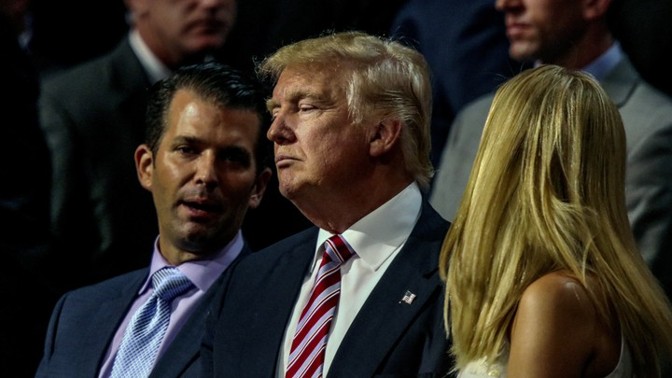
The most illuminating moment of the debate occurred when the president went after one of Joe Biden’s children, Adam Serwer argues.
“Biden acted like a father, doing what almost any parent would have done,” he writes.
One question, answered: California continues to burn. Does wildfire smoke make COVID-19 worse?
The hosts of our Social Distance podcast talked with John Balmes, a pulmonologist who has studied inhaled pollutants for decades, to find out.
Here’s a snippet of their conversation:
John Balmes: One of the risk factors for smoke exposure is an increased risk of lower-respiratory-tract infections. That’s acute bronchitis and pneumonia, which is particularly problematic in the midst of the COVID-19 pandemic.
James Hamblin: Does it increase your risk of having more severe disease once you’ve been infected if you’ve been living in a place that has high levels of exposure to particulate matter versus someplace else?
Balmes: Yes, there’s a building evidence with regard to air pollution, and particulate matter in particular, and COVID-19.
Find the full episode, “Fires Outside, Virus Inside,” on Apple Podcasts and Spotify.
Want to better understand this specific virus? Here are three key reads from our team:
We all need small delights. Here’s a break from the news:
This calls for a toast: Panic! at the Disco’s debut album, which turns 15 this week, is “an audacious and unlikely classic.”
Did someone forward you this newsletter? Sign up here.

from The Atlantic https://ift.tt/2GtG9rO
Every weekday evening, our editors guide you through the biggest stories of the day, help you discover new ideas, and surprise you with moments of delight. Subscribe to get this delivered to your inbox.
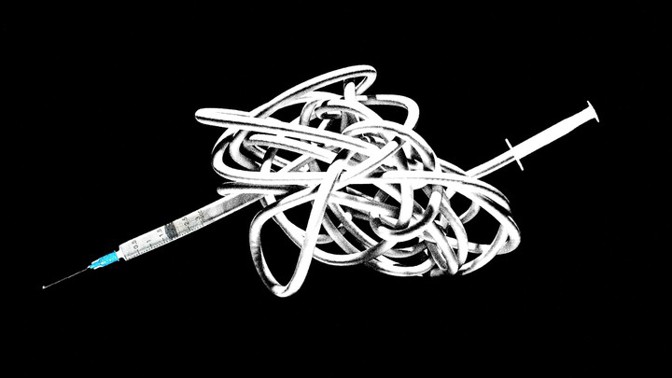
A COVID-19-vaccine rollout could be chaotic—and a true logistical nightmare, our health reporter Sarah Zhang warns in an essential new piece.
We caught up with Sarah to find out why—and hear the latest on the search for a vaccine.
The conversation that follows has been edited and condensed.
Caroline Mimbs Nyce: Why does this vaccine rollout have the potential to be such a headache?
Sarah Zhang: First, you have the challenge of getting what is very likely two doses of a vaccine to hundreds of millions of Americans in the middle of a pandemic. And they’re not interchangeable. If you get the first dose of one vaccine, you have to get that same vaccine as a second dose. So there’s gonna be a lot of paperwork involved.
Second has to do with the specific vaccines that are furthest along in clinical trials right now. They use new technology called mRNA, which hasn’t been used in vaccines before. The downside is that the technology is extremely fragile physically. One vaccine has to be kept at –94 degrees Fahrenheit, which you’re just not gonna find in a regular doctor’s office.
All these decisions have been made to get the vaccine out faster. But the trade-off is that they make them much harder to use in the field.
Caroline: You write in your piece that the first vaccine may not be the most important. Can you explain what you mean by that?
Sarah: Imagine: How are you going to get a vaccine that needs to be stored at –94 degrees into a developing country or a rural area? It seems pretty unlikely that that’s the vaccine that is going to be widely used across the world.
In the beginning, speed is really important. But as we hopefully develop more vaccines, how easy it is to use is going to be really important too.
Caroline: You’ve been cautioning readers to temper their expectations around a vaccine. What’s your advice going into this winter?
Sarah: Be patient. There’s a lot of cautious optimism that some of the vaccines that are in clinical trials are going to work.
It’s okay if some of them don’t; that’s the whole point of doing a trial. There will probably be news that feels disappointing, but that’s just a part of the process.
The fact that there are literally dozens of vaccines in the pipeline means that it’s very likely we’re gonna have one—or probably several—options. It’ll just take time, so we gotta hunker down, and wait for it.
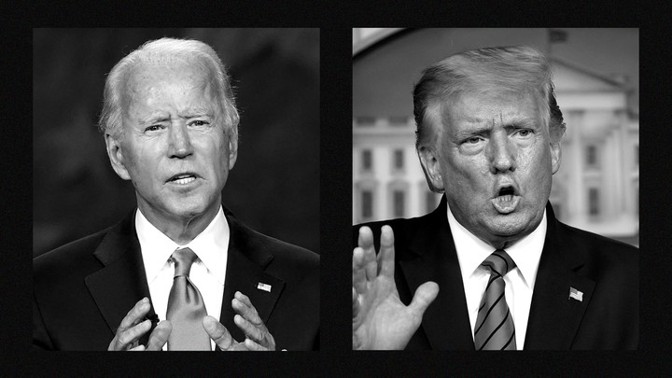
What to read as you wait for tonight’s debate to begin:
Here are three things to think about.
1. Some Democratic operatives “see the debates as Biden’s best chance to blow an election,” our staff writer Edward-Issac Dovere reports.
2. Peter Wehner, a contributor to our Ideas section, thinks Biden should call out the president as “a terribly broken man.”
3. The responsibility to fact-check what the candidates say tonight lies with viewers themselves, argues John Dickerson, who moderated a 2016 Republican-primary debate.
Today’s break from the news:
Our happiness columnist shares his best tips for breaking through hopelessness. For starters: Change your definition of productivity.
Did someone forward you this newsletter? Sign up here.

from The Atlantic https://ift.tt/2Sae5wn
Every weekday evening, our editors guide you through the biggest stories of the day, help you discover new ideas, and surprise you with moments of delight. Subscribe to get this delivered to your inbox.
This election could be the one that breaks America, Barton Gellman warns in our November cover story. Given its magnitude, we published the piece early online; read it now.
Bart and I caught up over email to discuss the ways America’s election mechanisms might break down entirely.
The conversation that follows has been edited and condensed.
Caroline Mimbs Nyce: So what happens if President Trump refuses to concede the election?
Barton Gellman: I don’t think it’s a question of “if.” Unless Trump scores a legitimate win in the Electoral College, everything we know about him says he will refuse to accept defeat and use every tool at his disposal to undo the result.
Refusing to concede is a remarkably powerful thing. Concessions are how elections end, full stop.
Trump will have plenty of options to keep the outcome in doubt—in court, on the streets, in the Electoral College, and in Congress. The subtext of his efforts will be that “nobody knows” who won, and that he is stepping in to restore stability.
Caroline: You argue that the president could use his powers to muddle the results, leaving no clear procedural winner. How so?
Bart: Unlike baseball, elections have no umpire—no singular authority with the power to rule decisively on the results.
The most significant risk is that Trump will ask Republican allies in battleground states to appoint Trump electors regardless of the outcome. We’re accustomed to choosing electors by popular vote, but the Supreme Court has said a state legislature may take back that power from the people and name any electors it likes.
According to a legal adviser to Trump and three top Republican leaders in Pennsylvania, they are already discussing contingency plans to set aside the voting results—by claiming the vote count is rigged. Republicans control the House and Senate in all six of the most closely contested swing states.
Caroline: There are many frightening details in your piece. Is there one that keeps you up at night?
Bart: What frightens me is that Trump has the power, with only modest help from GOP elected officials, to throw the outcome into doubt and to keep it unresolved almost indefinitely. And if he throws the decision to Congress, which he can do almost at will, the law is a labyrinth full of dead ends when it comes to how that’s resolved. Experts tell me that the Electoral Count Act is so garbled and full of logic bombs that it can easily lead to deadlock.
If two men show up to be sworn in on January 20, the chaos candidate and the commander in chief will be the same man.
Caroline: What’s your best advice to Americans going into November?
Bart: First and foremost, stop thinking about this election in conventional terms. Expect an extraconstitutional challenge, because it is very probably coming.
Take agency, because an election can’t be stolen without some kind of acquiescence from the people at large. So don’t acquiesce.
Vote. Vote early if your state allows. Vote in person if you can tolerate the risk, because late-counted mail votes will be the heart of the postelection contest.
Have a question for Bart—or any of our political reporters—about the upcoming election? Tell us.
One question, answered: A reader named Sydney writes in from Toronto, Canada:
I heard an immunologist on the radio today say that a coronavirus vaccine could be only 50 percent effective, in which case we’d still have to “live” with the virus even after it arrives. With all the talk of the vaccine being the way out, this is terrifying. What if the vaccine isn’t totally effective?
James Hamblin responds in his latest “Paging Dr. Hamblin” column:
No vaccine is perfectly effective. That isn’t bad news; it’s just a basic fact. … But though vaccines are only partly effective at protecting a single person, they can still be extremely effective collectively.
Continue reading. Every Wednesday, James takes questions from readers about health-related curiosities, concerns, and obsessions. He’s also answered:
Have one? Email Jim at paging.dr.hamblin@theatlantic.com.
41 days remain until the 2020 presidential election. Here’s today’s essential read:
The president’s decision to proceed with a Supreme Court nominee “could spell trouble for swing-state Republican senators in tough reelection fights,” our White House correspondent Peter Nicholas reports.
What to read if … you need a break from the news:
Erin Brockovich, the film, turns 20 this year. Erin Brockovich, the activist, isn’t slowing down.
Did someone forward you this newsletter? Sign up here.

from The Atlantic https://ift.tt/3kMtSOj
The United States has never failed to clear the bar of electing its next president. For The Atlantic’s new cover story, Barton Gellman issues a devastating warning that––in this year of plague, recession, “a reckless incumbent, a deluge of mail-in ballots, a vandalized Postal Service, a resurgent effort to suppress votes”––the mechanisms of decision making are fragile and at meaningful risk of breaking down. In short, our democracy has never before experienced anything like this.
His report for The Atlantic’s November cover is “The Election That Could Break America.” The Atlantic is moving up its publication to today, weeks ahead of schedule, given the urgency of the reporting and the narrowing time until November 3. Merely by refusing to concede, which no other candidate has done in the modern era, Trump would have the tools to keep the outcome in dispute indefinitely. Gellman's reporting shows that Republicans are already discussing contingency plans to seize on this uncertainty to try to bypass the popular vote and directly appoint electors to the Electoral College.
“Begin by rejecting the temptation to think that this election will carry on as elections usually do,” Gellman writes. “Something far out of the norm is likely to happen. Probably more than one thing. Expecting otherwise will dull our reflexes. It will lull us into spurious hope that Trump is tractable to forces that constrain normal incumbents.”
Gellman reports that the worst-case scenario is not that Trump simply rejects the election outcome and refuses to leave. The worst case is that he could use his power to “prevent the formation of consensus about whether there is any outcome at all.” On January 20, 2021, “two men could show up to be sworn in. One of them would arrive with all the tools and power of the presidency already in hand.” This would be a genuine constitutional crisis. And as Gellman’s reporting shows, there is no umpire in this game, no singular authority that can tell the loser that he has lost.
Details from Gellman’s reporting that are of extreme consequence to the American public include:
Republicans are discussing contingency plans to bypass the popular vote and directly appoint loyal electors to the Electoral College. According to sources in the Republican Party at the state and national levels, Gellman reports that, using a “justification based on claims of rampant fraud, Trump would ask state legislatures to set aside the popular vote and exercise their power to choose a slate of Trump electors directly.” A Trump-campaign legal adviser tells Gellman that “the push to appoint electors would be framed in terms of protecting people’s will. Once committed to the position that the overtime vote has been rigged, the adviser said, state lawmakers will want to judge for themselves what the voters intended.” Three Republican leaders in Pennsylvania tell Gellman they had already discussed the direct appointment of electors among themselves, and one says he has discussed it with Trump’s national campaign.
The 2020 presidential election will be the first in 40 years to take place without a federal judge requiring the Republican National Committee to seek approval in advance for any “ballot security” operations. The consent decree, a court order forbidding Republican operatives from using any of a long list of voter-purging and intimidation techniques, expired in 2018 after a federal judge ruled that the decree had worked and Republicans hadn’t recently violated its terms. As a result, Gellman writes, “Republicans have launched a program to recruit 50,000 volunteers in 15 contested states” to monitor polling places and challenge voters they deem suspicious-looking.
If you are a voter, think about voting in person. In a year when the presidential election may be the first conducted primarily by mail, Trump’s continual decrying of mail-in voting as a fraud is not meant to prevent votes from being cast this way. His purpose is to discredit the practice, starve it of resources, and suppress votes. His attacks are funneling Republicans away from the mail-in ballots that he will suppress and attempt to disquality. Gellman writes: “Trump, in other words, has created a proxy to distinguish friend from foe. Republican lawyers around the country will find this useful when litigating the count. Playing by the numbers, they can treat ballots cast by mail as hostile, just as they do ballots cast in person by urban and college-town voters. Those are the ballots they will contest.”
With only weeks until Election Night, Gellman reports that right now, the best we can do is an ad hoc defense of democracy. “If you are a voter, think about voting in person after all,” he advises. “If you are at relatively low risk for COVID-19, volunteer to work at the polls. If you know people who are open to reason, spread the word that it is normal for the results to change after Election Night. If you manage news coverage, anticipate extraconstitutional measures and position reporters and crews to respond to them. If you are an election administrator, plan for contingencies you never had to imagine before. If you are a mayor, consider how to deploy your police to ward off interlopers with bad intent. If you are a law-enforcement officer, protect the freedom to vote. If you are a legislator, choose not to participate in chicanery. If you are a judge on the bench in a battleground state, refresh your acquaintance with electoral case law. If you have a place in the military chain of command, remember your duty to turn aside unlawful orders. If you are a civil servant, know that your country needs you more than ever to do the right thing when you’re asked to do otherwise.”
“Take agency. An election cannot be stolen unless the American people, at some level, acquiesce.”
“The Election That Could Break America” is published at The Atlantic today. The November issue will continue to publish online in the coming weeks.

from The Atlantic https://ift.tt/3cuKjfe
Every weekday evening, our editors guide you through the biggest stories of the day, help you discover new ideas, and surprise you with moments of delight. Subscribe to get this delivered to your inbox.
200,000 dead. And it felt like any other Tuesday.
Today, the United States marked the official passing of that milestone (though in truth, it likely happened earlier).
We’re pausing to reflect, both on what led up to this moment—and on the grief that undergirds it:
These losses represent a deep failure of empathy.
“Part of the reason this majority-white, majority-non-elderly country has been so blasé about COVID-19 deaths is that mostly Black people and old people are dying,” Olga Khazan reports.
Americans are left grieving in distinctly new ways.
Back in May, Joe Pinsker spoke with six experts on mourning. “Grief can be a really isolating experience, and that has been very much magnified during the pandemic,” one told him.
Here’s some advice on processing loss from our Dear Therapist columnist.
When Lori Gottlieb lost her father this spring, she wrote a letter, advising herself on how to understand her own grief. It’s worth revisiting today.
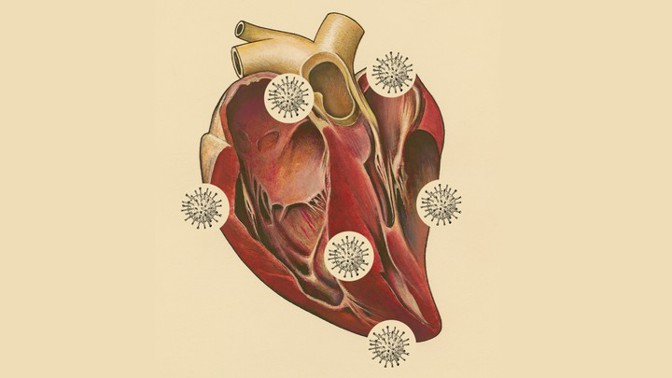
One question, answered: What does COVID-19 do to the human heart?
In his latest, Ed Yong wades into the debate:
News stories and scientific articles have spun a narrative about a bizarre virus that behaves like no other, and a supposedly respiratory illness that should perhaps be reconsidered as a vascular disease. But several cardiologists and virologists I’ve talked with say such claims are overblown.
42 days remain until the 2020 presidential election. Here’s today’s essential read:
We’re a week out from the first presidential debate. “Almost every Democratic operative I’ve spoken with in the past few weeks remains petrified that Biden is going to bungle the debates in a way that costs him the election,” our politics staff writer Edward-Isaac Dovere reports.
What to read if … you need a break from the news:
One sperm donor. 36 children. A mess of lawsuits. Read Sarah Zhang on the case of Donor 9623.
Did someone forward you this newsletter? Sign up here.

from The Atlantic https://ift.tt/3mJ3E0P
A furious battle over a Supreme Court vacancy is arguably the last thing the United States needed right now.
The death of Justice Ruth Bader Ginsburg today represents a devastating loss for feminists who held up the 87-year-old as an icon of women’s rights, and as a bulwark protecting abortion rights and a wide range of other progressive ideals on a conservative Supreme Court.
But her passing less than two months before the presidential election also tosses one more lit match into the tinderbox of national politics in 2020: It will surely inflame a deeply polarized country already riven by a deadly pandemic, a steep economic downturn, and civil unrest in its major cities.
In Washington, the vacancy fight could ratchet up tensions to a level unseen even in the tumultuous Trump era. President Donald Trump will be eager to fill Ginsburg’s seat immediately, seizing an opportunity to rally his base before the election and to cement his legacy in the event he is defeated in November. He could also become the first president since Richard Nixon to install three justices on the high court in a single four-year term. Senate Majority Leader Mitch McConnell has already indicated he’s ready for another confirmation battle, either before or immediately after the election. Republicans might be hard-pressed to consider and approve a Trump nominee in the eight weeks before November, but even a victory by Vice President Joe Biden and a Democratic takeover of the Senate might not prevent Trump from successfully appointing another justice. Republicans would still control both the White House and the Senate until a new Congress takes office in early January.
Moreover, McConnell has insisted that the precedent he created to deny former President Barack Obama’s nomination of Judge Merrick Garland in the final year of Obama’s term—in a vacancy that occurred nearly nine months before the 2016 election—no longer applies, because the same party controls both the White House and the Senate majority. “Oh, we’d fill it,” the Kentucky Republican promised in May 2019, more than a year before Ginsburg announced the cancer recurrence that took her life. Never mind that the rationale McConnell gave at the time—that voters should have the chance to weigh in on their next Supreme Court justice—would seem to apply even more strongly during an election in which the first ballots have already been mailed.
[Read: Mitch McConnell’s grand plan was obvious all along]
The more salient question is not whether McConnell would try to confirm Trump’s nominee but whether his GOP majority would go along with it—either before the election ends in November or in a lame-duck session of Congress afterward. A number of Republican senators have already said they’d want to fill a Supreme Court vacancy if Trump is still in office. But McConnell would need the votes of 50 out of his 52 members to allow Vice President Mike Pence to break a tie (assuming all Democrats voted against Trump’s nominee), and the numbers may not be on his side. One Republican, Senator Lisa Murkowski of Alaska, already voted against the president’s last Supreme Court nominee, Brett Kavanaugh, who won confirmation by a single vote in 2018. Another, Senator Susan Collins of Maine, supported Kavanaugh but is now in danger of losing her bid for a sixth term this fall. And a third Republican, Senator Mitt Romney of Utah, voted to convict Trump during the president’s impeachment trial earlier this year; having already tried to remove Trump from office, Romney might be disinclined to give him another lifetime appointment to the Supreme Court.
The Supreme Court has now seen three vacancies in the last five years. Because of her age and ill health, Ginsburg’s is the least surprising. But it may be the most consequential. Justice Antonin Scalia’s 2016 death did not change the balance of power on the court (he was replaced not by Garland but by the conservative Justice Neil Gorsuch), and Kavanaugh is only somewhat more conservative than the justice he succeeded, Anthony Kennedy, who was an appointee of President Ronald Reagan. Should Trump pick Ginsburg’s replacement, however, the ideological shift rightward it represents would likely be the largest for a single Supreme Court seat since the conservative Clarence Thomas succeeded the liberal Thurgood Marshall nearly three decades ago. And that opportunity could be too enticing for Republicans to pass up.
McConnell, backed by the Senate Republicans who have ratified his decisions, has shown above all a willingness to wield power to its fullest extent when it comes to the federal judiciary, to interpret as widely as possible the Constitution’s delegation to the Senate of the authority to “advise and consent” on presidential nominations. He cares more about the confirmation of conservative judges than anything else the Senate does, and historically, conservative leaders and voters have seemed to care more about the judiciary, and the Supreme Court, than their progressive counterparts. Republicans saw the vacancies on the high court during both the 2016 and 2018 elections as boosting their base’s turnout, including in key Senate races, while Democrats were unable to parlay the anger over McConnell’s handling of Garland into sufficient turnout to elect Hillary Clinton or a Democratic Senate majority four years ago.
Republicans may hope the vacancy caused by Ginsburg’s death will have the same mobilizing effect this year, especially in states like Arizona, North Carolina, Iowa, Maine, and Colorado, where both Trump and GOP Senate candidates are at risk of losing. But the Ginsburg seat holds even more significance for Democrats, who have panicked about her health scares and advancing age for years. They fear not only the rollback of progressive gains—including restrictions on abortion rights and the possible invalidation of the Affordable Care Act—but also the potential that a 6-3 conservative majority could hand Trump virtually unchecked power or overturn any major achievement a President Biden could hope to accomplish. The vacancy thus might provoke the turnout boost for Democrats that previous court battles did not, as well as a push for retribution if Republicans are seen as ignoring the will of the voters. A successful GOP effort to replace Ginsburg with a conservative before or immediately after a Democratic victory will almost certainly lead to more progressive calls for Biden—along with a willing Democratic Senate—to simply pack the Supreme Court with more seats to offset the conservative advantage.
The stakes of the next two months—with hundreds dying daily from the coronavirus, with an incumbent president fanning violence and undermining the integrity of a national election—could hardly have been higher before Ruth Bader Ginsburg succumbed to cancer. Into that cauldron now goes a Supreme Court fight, with an outcome that could alter American society not only for the next four years, but for a generation to come.

from The Atlantic https://ift.tt/33KQwzu
Every weekday evening, our editors guide you through the biggest stories of the day, help you discover new ideas, and surprise you with moments of delight. Subscribe to get this delivered to your inbox.
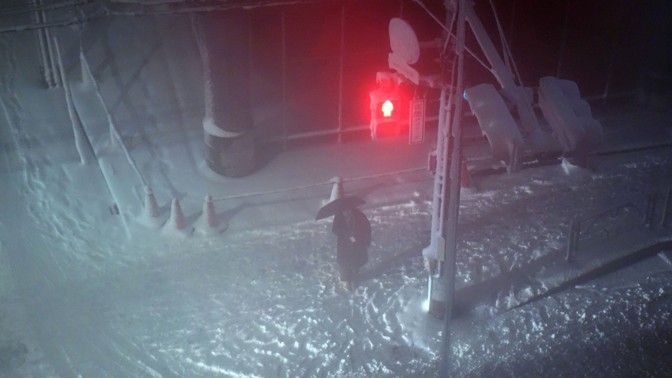
The coronavirus isn’t going away this winter. In fact, the U.S. outbreak is poised to get worse.
Don’t pin your hopes on a vaccine, either. Anthony Fauci, the director of the National Institute of Allergy and Infectious Diseases, tells The Atlantic that a vaccine will not likely be in widespread distribution “until well into 2021.”
What can be done in the meantime?
Our staff writer James Hamblin spoke with dozens of experts over the past few months, distilling their recommendations into five actionable steps (excerpted below):
1. Accept reality.
Do not waste your time and emotional energy planning around an imminent game-changing injection or pill in the coming months.
2. Plan for more shutdowns.
Everyone will be better prepared if we plan for schools to close and for cities and businesses to shut back down, even while we hope they won’t have to.
3. Live like you’re contagious.
This primarily means paying attention to where you are and what’s coming out of your mouth. … During the holidays, don’t plan gatherings in places where you can’t be outdoors and widely spaced. This may mean postponing or canceling long-standing traditions.
4. Build for the pandemic.
This is an overdue opportunity to create and upgrade to permanently pandemic-resistant cities, businesses, schools, and homes. … Poor indoor air quality, for example, has long been a source of disease.
5. Hunt the virus.
Developing fast and reliable ways to detect the coronavirus will become only more crucial during the winter cold- and- flu season.
Read James’s full piece on how we can survive the winter.

Watch.
It’s Emmy weekend. Do your homework before Sunday’s broadcast: Stream one of the most talked-about television shows of the year (and read what our writers had to say about it). Try:
-
Watchmen (“the strangest show to come to TV in a minute”);
-
Succession (“a bitter, schadenfreude-flavored tonic to help digest the oily excesses of the 0.001 percent”);
-
The Marvelous Mrs. Maisel (“vacantly uplifting”);
-
Unbelievable (a remarkable study of how sexual-assault investigations should be conducted); or
-
Schitt’s Creek (which aired its final season this year).
If you favor the big screen to the small, read David Sims on the four movies you need to watch this fall.
Get creative.
Try to write a novel in three sentences. Or make your first zine. Our staff laid out eight suggestions for keeping your artistic flame lit earlier this year.
Explore the ties that bind.
Meet the four men named Paul O’Sullivan who decided to start a Paul O’Sullivan band. The empty nesters who run a bookstore together. Or the eighth graders who stay connected by throwing a weekly PowerPoint party.
Find their stories and more in “The Friendship Files,” a project by Julie Beck. If you know of a unique friendship story—yours or someone else’s—that should be featured, get in touch.

Tour America from your couch.
Our “Fifty” project, from photo editor Alan Taylor, highlights extraordinary photography of each U.S. state. This week’s selection, pictured above, is known as the Evergreen State. Can you guess which state that is?
Thanks for reading. This email was written by Caroline Mimbs Nyce, who can’t stop thinking about this story about the American bunker business—and how a company designed one with “space for a client’s racehorses.” It was edited by Shan Wang.
Did someone forward you this newsletter? Sign up here.

from The Atlantic https://ift.tt/2RFoXCa
Every weekday evening, our editors guide you through the biggest stories of the day, help you discover new ideas, and surprise you with moments of delight. Subscribe to get this delivered to your inbox.
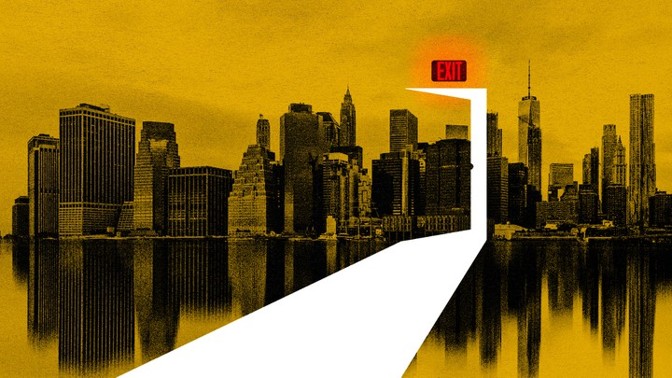
Perhaps no other American city has drawn as much attention—and scrutiny—during this pandemic as New York, the site of a devastating coronavirus wave this spring. Stories of the rich fleeing to country homes en masse prompted some to start writing the city’s eulogy.
But not everyone’s buying that narrative. Below, three writers cast their doubts:
New York is not dead. Get ready for the urban comeback.
The history of plagues, fires, and other urban disasters shows that they often transform cities for the better, Derek Thompson writes in our latest magazine issue.
Talmon Joseph Smith, a staff editor at The New York Times, talked with residents on the street in Brooklyn. He concluded that “New Yorkers—the majority of whom do not live in the wealthiest corridors of Manhattan—don’t seem particularly injured about, or engrossed by, the perceived loss of Manhattan as a playground for the rich.”
The pandemic didn’t kill New York. Affluence did.
“This is the challenge that New York will have to face after the pandemic, to get back to that city for working people,” the writer and novelist Kevin Baker argues.
Further reading:
-
Panic-moving to the suburbs is a gamble, Amanda Mull warned this spring.
-
Vilnius, the capital of Lithuania, shows how the pandemic is already remaking cities, our London-based staff writer Yasmeen Serhan reported in June.
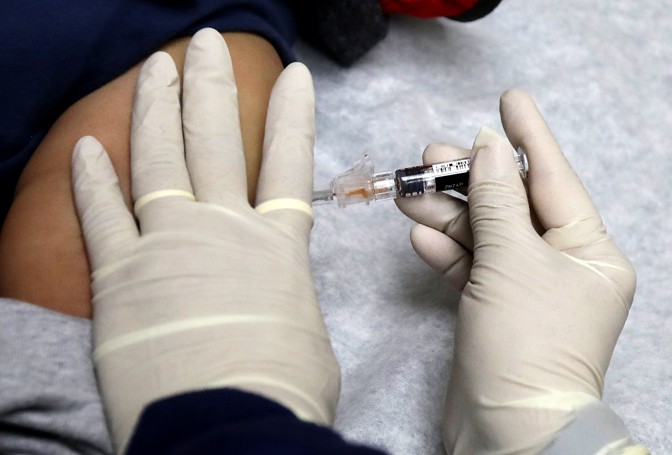
One question, answered: How should I prepare for flu season?
“Get a shot, and do it soon,” our assistant editor Kate Cray reports.
Hospitals, which typically fill up in winter, have already been overrun by surges of the coronavirus and now risk being overwhelmed by flu and COVID-19 cases at the same time.
Vaccination and effective social distancing may limit flu spread here—like it seems to have in Australia—but that depends on us, says Kelly Moore, a health-policy professor at Vanderbilt University who specializes in immunization.
There’s no reason to expect that flu symptoms will be any less severe this year for those who do get sick, says David Vlahov, an epidemiologist and a nursing professor at Yale. And health experts are worried that those who got their shots at work or at school might skip them this year.
“Anytime something becomes less convenient, it’s less likely to happen,” says Susan Bailey, an immunologist and the president of the American Medical Association.
Here are a few things to know ahead of time:
The shot can take around two weeks to strengthen the immune response and then should remain effective throughout the season.
The Centers for Disease Control and Prevention recommends getting vaccinated before the end of October, though the shot is still worth getting later.
Vaccines will be available at most health centers and pharmacies.
Expect typical safety precautions at the clinics: masks, gloves, hand-washing, and distance between people. (You can view the full list of CDC guidelines here.)
Many of those at higher risk for COVID-19 are also at a high risk for the flu, and it’s especially important that they get a shot, experts told me. Moore suggested that anyone worried about potential exposure call in advance, and Vlahov pointed out that some clinics have special “senior hours.”
47 days remain until the 2020 presidential election. Here’s today’s essential read:
Our politics staff writer Elaine Godfrey profiles the progressive activist begging the left to stop owning itself.
What to read if … you’re burnt out on Folklore:
Check out our staff writer Spencer Kornhaber’s review of Sufjan Stevens’s “bossy and bitchy” new album, which is out later this month.
What to read if … you need a break from the news:
Coffee drinkers, I apologize in advance, but you’re going to want to read this.
Did someone forward you this newsletter? Sign up here.

from The Atlantic https://ift.tt/3iI7QeG
Every weekday evening, our editors guide you through the biggest stories of the day, help you discover new ideas, and surprise you with moments of delight. Subscribe to get this delivered to your inbox.
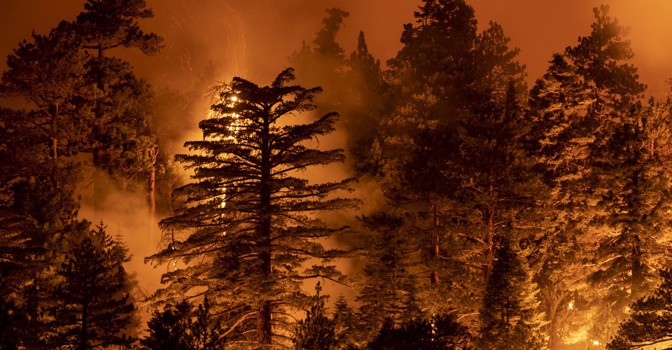
By the time President Trump flew West—and by the time his 2020 opponent, Joe Biden, gave his first speech on the matter—the fires had been burning for weeks. Millions of scorched acres and dozens of smoke-filled days later, the national political conversation had finally caught up.
Why did it take so long? Here are two factors to consider:
-
Wildfires don’t map neatly onto polarized political narratives. Despite the scale of the damage, “the images of the Portland riots are far more likely to dominate the public debate in Oregon and beyond,” Anne Applebaum argues.
-
The Electoral College enables candidates to deprioritize certain voters. “If every additional vote in California, Oregon, and Washington … mattered as much as every additional vote in a swing state, Biden might have spent the past few weeks touring the West Coast,” Peter Beinart argues.
Further reading: My colleague Robinson Meyer offers a useful analogy for understanding the intensity of the fires: Imagine boiling a pot of ravioli until all the water evaporates, until the pasta begins to smoke. This phenomenon helps explain why large swaths of the forests have lit up like kindling.
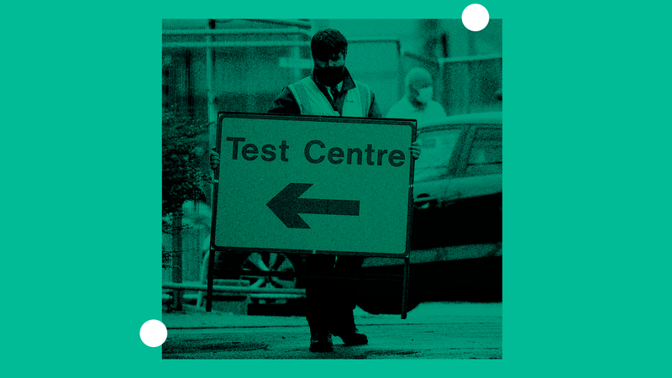
One question, answered: Short of a vaccine, rapid tests are supposed to make the biggest difference in getting life back to normal.
When will they be here? And how big of an impact will they actually make?
“Testing is going to be a big part of any way back to normalcy,” Alexis C. Madrigal, who has covered testing extensively, told the hosts of our Social Distance podcast. Here’s a snippet of their conversation:
Alexis C. Madrigal: What people are trying to develop right now are faster tests, something on the order of a few minutes. They’re inexpensive paper-strip-type tests, more like pregnancy tests. And [they] would decentralize testing radically so you wouldn’t have to go to a testing center. You would just be able to buy these things at retail or maybe go to a testing kiosk.
Katherine Wells: Is this, like, you just spit on a paper strip and it turns a color?
Alexis: Yeah, or you swab your nose … It’s an easy test. It’s a fast test. And it’s a cheap test. Instead of costing from $10 to $150, it costs from $2 to $10.
What to read if … you’re wondering why everything seems sold out online:
The problems go beyond supply-chain scrambles. “The coronavirus has eaten away at the entire system by which things are bought and sold in America,” Amanda Mull reports, “and few signs of improvement are on the horizon.”
What to read if … you need a break from the news:
After watching her best friend struggle with miscarriages, Debbie Vibber offered to serve as her surrogate. She ended up getting pregnant—with quadruplets.
“Nineteen years later, the kids are grown up and the friends—and their kids—are still as close as family,” Julie Beck reports in “The Friendship Files.”
Did someone forward you this newsletter? Sign up here.

from The Atlantic https://ift.tt/3hz3C86
Every weekday evening, our editors guide you through the biggest stories of the day, help you discover new ideas, and surprise you with moments of delight. Subscribe to get this delivered to your inbox.
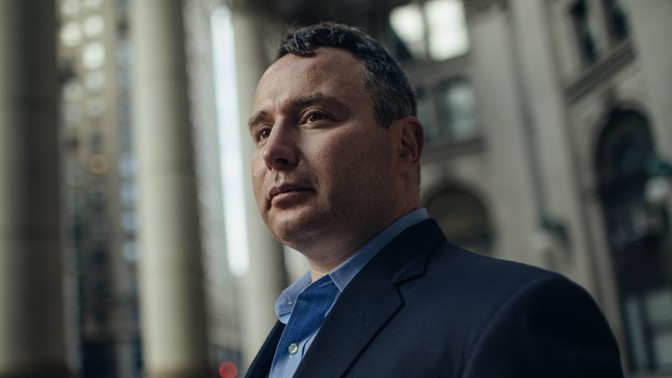
A telephone call demolished Alexander Vindman’s life.
Vindman, who was famously on the line when President Donald Trump asked Ukraine’s Volodymyr Zelensky to investigate Joe Biden and his son, Hunter, served as a key witness during Trump’s impeachment trial.
Now Vindman speaks for the first time, warning about the American president’s attempts to please the Russian president, Vladimir Putin.
Here are three notable moments from his conversation with our editor in chief, Jeffrey Goldberg:
1. On whether Trump is a Russian-intelligence asset:
“President Trump should be considered to be a useful idiot … an unwitting agent of Putin.”
(Some context via Jeffrey: “Useful idiot is a term commonly used to describe dupes of authoritarian regimes.”)
2. On whether Russia is blackmailing Trump:
“They may or may not have dirt on him, but they don’t have to use it.”
Vindman continues:
“In the Army, we call this ‘free chicken,’ something you don’t have to work for—it just comes to you. This is what the Russians have in Trump: free chicken.”
3. On the end of his Army career:
It was “destroyed” by the president, he says. “I’m not crying over spilled milk. I have other things to do.”

The news in three sentences:
(1) Fires continue to scorch the West—see how one photographer captured the blazes. (2) Major prodemocracy (and, notably, women-driven) demonstrations continue in Belarus. (3) And scientists found a possible sign of life on Venus (not definitive proof—but still unexpected).
One question, answered: How do I tell my parents I’m not planning on coming home for the holidays?
Our special-projects editor, Ellen Cushing, talked with one expert:
I asked Susan Newman, a social psychologist specializing in families and the author of The Book of No, about how adult children can have this conversation. Her advice? Let them down easy, but be firm. Explain that this doesn’t mean you love them any less, but that you’re worried about spreading the virus. Underscore that this is a temporary reaction to unprecedented events, not a permanent change. And make a plan now to be together in some way: Set up a FaceTime or Zoom call, or promise you’ll come visit as soon as it’s safe to travel, whenever that is.
If your parents push back, she recommends focusing on your own feelings of anxiety or fear, rather than trying to change their minds by bombarding them with statistics or news coverage. “You can say, ‘I understand how you feel but I don't feel the same. I’m quite frightened by this and I don’t feel it’s worth it,’” she said.
Most of all, stand your ground. In situations like this, Newman said, “you, the adult child go back to being your 10-year-old self, and you believe that for your parents to love you and be happy with you, you need to acquiesce to everything they ask and want.” But you don’t, and doing so sets a perilous precedent: “You don't want to slide back to your parents being the parent and you being the child, because you’re not a child anymore.”
What to read if … you need a break from the news:
Toby Dorr spent her life following the rules—until the day she helped a convict break out of prison.
Dear Therapist
Every week, Lori Gottlieb answers questions from readers about their problems, big and small. In her most recent column, she advises a reader whose mom won’t stop nagging her about her weight:
I am heavier than some of my friends, but I’m not overweight. I remind her that my weight is fine because I’m strong and I dance a lot, but she doesn’t listen to me.
Read the rest, and Lori’s response. Write to her anytime at dear.therapist@theatlantic.com.
Did someone forward you this newsletter? Sign up here.

from The Atlantic https://ift.tt/2RpYh8v
Every weekday evening, our editors guide you through the biggest stories of the day, help you discover new ideas, and surprise you with moments of delight. Subscribe to get this delivered to your inbox.

Remember.
Today marks the anniversary of the 9/11 attacks. “Never in the past 19 years has America needed a reminder of collective resolve more,” Garrett Graff writes.
Revisit a poem from yesteryear.
Here are three, as selected from our archives by assistant editor Faith Hill:
-
“Late Loving” by Mona Van Duyn (1986);
-
“Venus of Willendorf” by Yusef Komunyakaa (1998); or
-
“Winter’s Tale,” by Maxine Kumin (2009).
Consider memorizing one, to stave off the sense of powerlessness you may be feeling.
Read a short story.
“He wanted to be able to try to fly one more time, even if it was too late,” the author Caleb Crain writes in “Trajectory.” In a Q&A on our site, Crain discusses the inspiration for the new story, his writing process, and more.
Or a powerful work of nonfiction.
Can an unloved child learn to love? Melissa Fay Greene looks at what became of Romanian children who were deprived of human contact thirty years ago.
Watch.
What does an Oscar-winning director watch during an age of social distancing? David Sims spoke with Moonlight's Barry Jenkins back in April to find out.

Tour America from your couch.
Our “Fifty” project, from photo editor Alan Taylor, highlights extraordinary photography of each U.S. state. This week’s selection, pictured above, is known as the Pelican state. Can you guess which state that is?
Did someone forward you this newsletter? Sign up here.

from The Atlantic https://ift.tt/3k4X0ja
Every weekday evening, our editors guide you through the biggest stories of the day, help you discover new ideas, and surprise you with moments of delight. Subscribe to get this delivered to your inbox.
Nine months into this outbreak, your brain may feel like it’s been tumbling around in a washing machine, bouncing up against despair and hope intermittently.
Today, we look at some of the cognitive traps that are muddling Americans’ thinking—and offer insights into what’s still to come:
America is trapped in a pandemic spiral.
Ed Yong, whose coverage of this pandemic has been essential, lays out nine conceptual errors that continue to dog the country—including, troublingly, a habituation of horror.
The next phase will be emotionally challenging.
“We’ve been psychologically kicking the can down the road,” Juliette Kayyem writes. But the pandemic won’t end when the year does, she warns.
Today’s news, in two sentences:
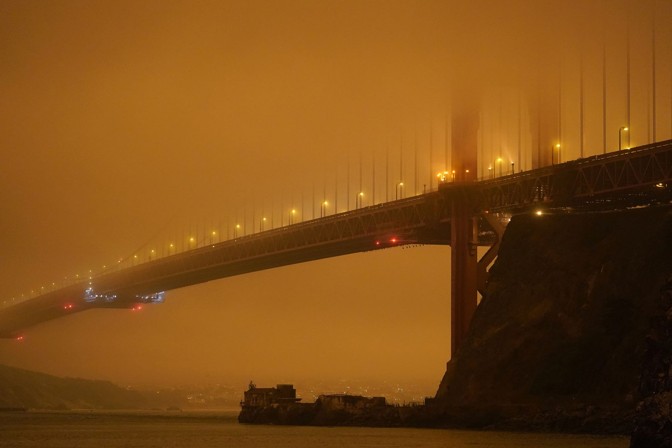
(1) A new book from Bob Woodward alleges that President Donald Trump admitted to minimizing the danger of the coronavirus. (2) Fires continued to ravage the West, leaving San Francisco bathed in a dystopian orange glow.

One question, answered: A reader named Mike from Berlin, Germany, asks: Does America need another shutdown?
James Hamblin responds in his latest “Paging Dr. Hamblin” column:
In theory, a shutdown should cost a country a lot of money in the short term, but cost less than limbo in the long run, which prolongs our return to anything resembling normalcy. The U.S. didn’t operate under this framework in the spring. A more deliberate process could have discrete promises about how long the shutdown would last, and exactly what kinds of support could be counted on, from day one. It could even involve a week or two of advance notice.
At a fundamental level, what stands in the way of such a move is the American tendency to see shutdowns as breaches of personal liberty. Individuals would have to be willing and able to isolate themselves after high-risk contacts, to resist our innate temptation to flout restrictions, and to submit to tracing and monitoring at a level that Americans don’t seem likely to tolerate in the same way that other citizens have.
Read the rest. Every Wednesday, James takes questions from readers about health-related curiosities, concerns, and obsessions. He’s also answered:
Have one? Email James at paging.dr.hamblin@theatlantic.com.
What to read if … you miss going to your gym:
For some, it’s more than just a place to exercise: “The gym has taken on a role all its own in American life,” Amanda Mull writes.
What to read if … you need a break from the news:
Read Lawrence Weschler on how the search for an unknown master photographer led to a ghostly trove of images, and down a hall of mirrors.
Did someone forward you this newsletter? Sign up here. Need help? Contact Customer Care

from The Atlantic https://ift.tt/3m6YFXp
Mandela Barnes, Wisconsin’s 33-year-old lieutenant governor, is only a few years older than Jacob Blake, who was shot seven times by a police officer in Wisconsin last month.
It’s hard, Barnes told me on the latest episode of The Ticket, to be months past the Black Lives Matter protests set off by the death of George Floyd and feel like nothing has improved. It’s harder, he said, to acknowledge this to others, as when he met with the Milwaukee Bucks in the conversations that initiated the temporary NBA and wider sports strikes late last month.
“‘What has changed since the death of George Floyd?’” he said the Bucks star George Hill asked him. “And I said, ‘Honestly, not a whole lot.’”
After a week in which both President Donald Trump and the Democratic presidential nominee Joe Biden traveled to Kenosha to try to address the shooting and the violence that followed, Barnes said, many people are misunderstanding what actually needs to be done to confront police violence and structural racism.
Listen to our conversation here:
Subscribe to The Ticket on Apple Podcasts, Spotify, or another podcast platform to receive new episodes as soon as they’re published.
Here’s a sample of the conversation, edited for length and clarity.
Edward-Isaac Dovere: When the news came that Jacob Blake was shot, you posted something very simple: “You’ve got to be kidding me.” That is not shock that this happened in America. It seems like you were just exasperated.
Mandela Barnes: Completely exasperated. I had just got done reading a book by the lake, sitting outside having a great day, getting ready to go into the week. And then I look online—you know, opening Twitter is always a mistake—but I open Twitter and see Kenosha trending, saw the video and I honestly thought, You have got to be kidding. This did not just happen. After months of the largest movement for racial justice in this nation’s history. People in all corners of Wisconsin have been showing up, marching, holding demonstrations small and large.
The audacity that I saw in that video, for an officer to shoot a person in the back seven times. After all of this. After all the marches. After all the demonstrations. After all the protests. Everybody seemingly coming together to acknowledge that this is a crisis that we face and have faced for some time, that this could still happen.
Dovere: What was your reaction when you saw the video of Kyle Rittenhouse walking by the police with his gun?
Barnes: Oh man, that was another “You have got to be kidding me” moment. Because that’s the dichotomy that we’re talking about. It’s the reason why people show up to march. That this armed person who shot three people, killed two, is able to just walk the street. Police didn’t even give him a second look.
It begs the question—and it’s a very rhetorical question: What are police officers actually threatened by? What threatens them in actuality? Is it a person who is walking the street who claims to be some sort of militia member with a long-rifle assault-style weapon? Or is it somebody who is unarmed and Black? Who is more frightening to you?
Dovere: You said you didn’t want President Donald Trump to come to Kenosha like he did at the beginning of the week. Why not?
Barnes: Donald Trump has yet to condemn the killings of two people in our streets. We see this young man, who was transported across state lines by his own mother, killed two people in cold blood on our city streets, severely injured another … has not been rebuked once by our president. Yet the actions of this man have essentially been celebrated by the same president. You can’t sit here and talk about “lawlessness” and “mobs” coming in, and try to create division and scare people, when the actual guy that killed somebody is on your side.
Dovere: Joe Biden also came this week. Both of them said it’s not about politics, but of course they are both candidates for president who made special trips to Kenosha. Isn’t that about politics?
Barnes: It is beyond politics, but it takes political leadership to fix this sort of moment. And if you have a person who is in power right now who is only making things worse, whether it’s by his incendiary remarks, his statements about the protests in general … and showing this total disconnect from reality, then yes, it does matter. It matters who is in leadership. It matters who we elect. And Joe Biden’s trip is a little bit different.
I’ve gotten asked about it before, and I maintain my statement: Anybody who seeks to come to this state to create more division is not welcome. People who want to be a part of Kenosha’s healing? Great. Jesse Jackson was here. He is a political figure. It’s about your approach. What are you bringing into our state? We don’t need more hate. We don’t need more fear.
Dovere: Do you think there is anything to the idea that the Democratic Party has failed Black Americans, failed cities?
Barnes: No, I won’t say that. Because the same people who show up and say, “These Democrat mayors are running these cities into the ground,” what is their answer? They never have an answer. It’s always finger pointing. We’re talking about cities with large populations. You have a large population; you are going to have challenges. We have a more diverse population, and when opportunities are fewer for people, you are going to have these issues. All of these major cities in America, especially in the Midwest, were built on an industry that doesn’t exist anymore—the manufacturing backbone of these cities and towns across Wisconsin, Illinois, Indiana, Ohio, Pennsylvania, Michigan … Once those factories left and closed their doors, it didn’t just take the jobs, it took the identity of these communities. And we are dealing with a generational impact of that loss where people were able to come to places like Milwaukee and thrive.
Dovere: You were involved with the Milwaukee Bucks’ decision to protest a game, which led to a wider shutdown of first the NBA, then other sports. How did you get involved?
Barnes: The Bucks decided that they weren’t going to go on the court, and they wanted to talk to somebody. They needed to talk to somebody to figure out exactly what was going on and what was going to change.
This has been a team that’s been committed to justice issues. And George Hill straight-up asked, “What has changed since the death of George Floyd?” And I said, “Honestly, not a whole lot.”
We introduced a package of bills in the wake of George Floyd’s death two months ago, and the Republican-controlled legislature has refused to even have a debate on these bills. I said, “Now a couple of school boards got police officers out of schools, but that’s about the most meaningful thing that’s happened since George Floyd.” And they were shocked. They were genuinely shocked. And they just wanted to know: What could they do?
And I said, “Whatever you say, the two main points I want you to hit on are that the legislators need to respond. They need to come into the special session that the governor has called for. They need to meet and have a debate on these bills. They need to take up this legislation. And also just remind people to vote.”

from The Atlantic https://ift.tt/2FaKK1P

